At 3 a.m. on Tuesday, October 27, Ukraine time, the guns were supposed to stop — at least in one small corner of a vast war. A localized ceasefire took effect in southern Ukraine, ahead of a humanitarian mission brokered by First Lady Melania Trump.
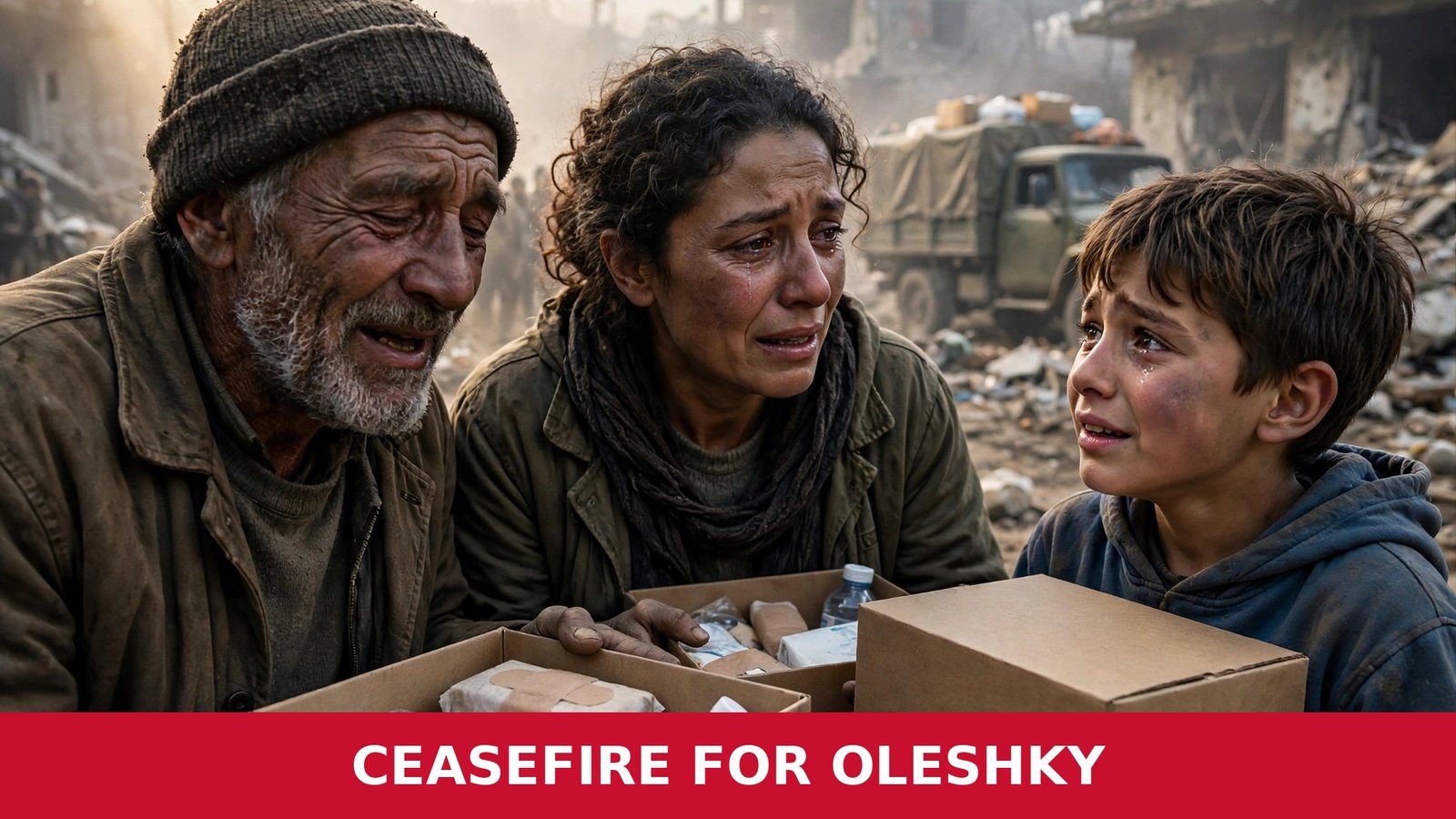
The mission's destination is Oleshky, in the Kherson region, a town now under Russian occupation. Up to 2,000 people are stranded there, according to reports, with food and medicine running low, unable to leave because of mines and drones that make every road a risk.
The ceasefire is due to last through Saturday, or longer if it holds. It follows talks with civilian negotiators from both Russia and Ukraine, held after briefings at the United Nations. It is, by any measure, a fragile arrangement — a pause negotiated not by generals, but by a first lady and civilian intermediaries, for the sake of people who have no army to protect them.
A mission built on a narrow window
Humanitarian pauses like this one are notoriously difficult. They require both sides to trust that aid trucks will not be used as cover, that civilians will not be targeted as they move, and that a local pause will not be exploited elsewhere on the front.
That is why the details matter. This is not a nationwide ceasefire. It is localized, specific, and time-limited — designed to get aid into one town, to people who have been cut off from help for too long.
For the residents of Oleshky, the distinction between a local pause and a national peace deal is meaningless. What matters is whether food arrives, whether medicine reaches the sick, and whether they can move without fear of a drone overhead.
War elsewhere did not pause
Even as the ceasefire took effect in the south, the wider war continued. Kyiv was hit by ballistic missiles minutes after 3 a.m. — a brutal reminder that a pause in one place does not mean a pause everywhere.
The previous day had been violent too. Late Monday, a strike on university grounds in Kyiv killed one person and injured ten. Attacks in Kharkiv killed two people and injured four.
Those numbers are small compared with the worst days of the war, but they are not abstract. Each one is a person killed on a campus, in a city, on an ordinary Monday — while diplomats were negotiating a pause hundreds of miles away.
Why a first lady's role matters
First ladies do not normally broker ceasefires. That is what makes this mission unusual, and why it has drawn attention far beyond Ukraine.
Melania Trump's involvement gives the mission a profile that a standard aid convoy would not have. It also raises questions that have no easy answers: can a high-profile humanitarian effort succeed where formal negotiations have stalled? Or does its very visibility make it harder to sustain, by turning a local pause into a political symbol?
For now, those questions are secondary. The ceasefire is in effect. The aid mission is the next step. And in Oleshky, 2,000 people are waiting to find out whether the promises made in meeting rooms will translate into food, medicine, and a few days without fear.
If it holds through Saturday, it will be a small but real achievement in a war that has offered few of them. If it breaks, it will be another reminder of how hard even a pause can be.
Sources: AP via NPR; Mathrubhumi.