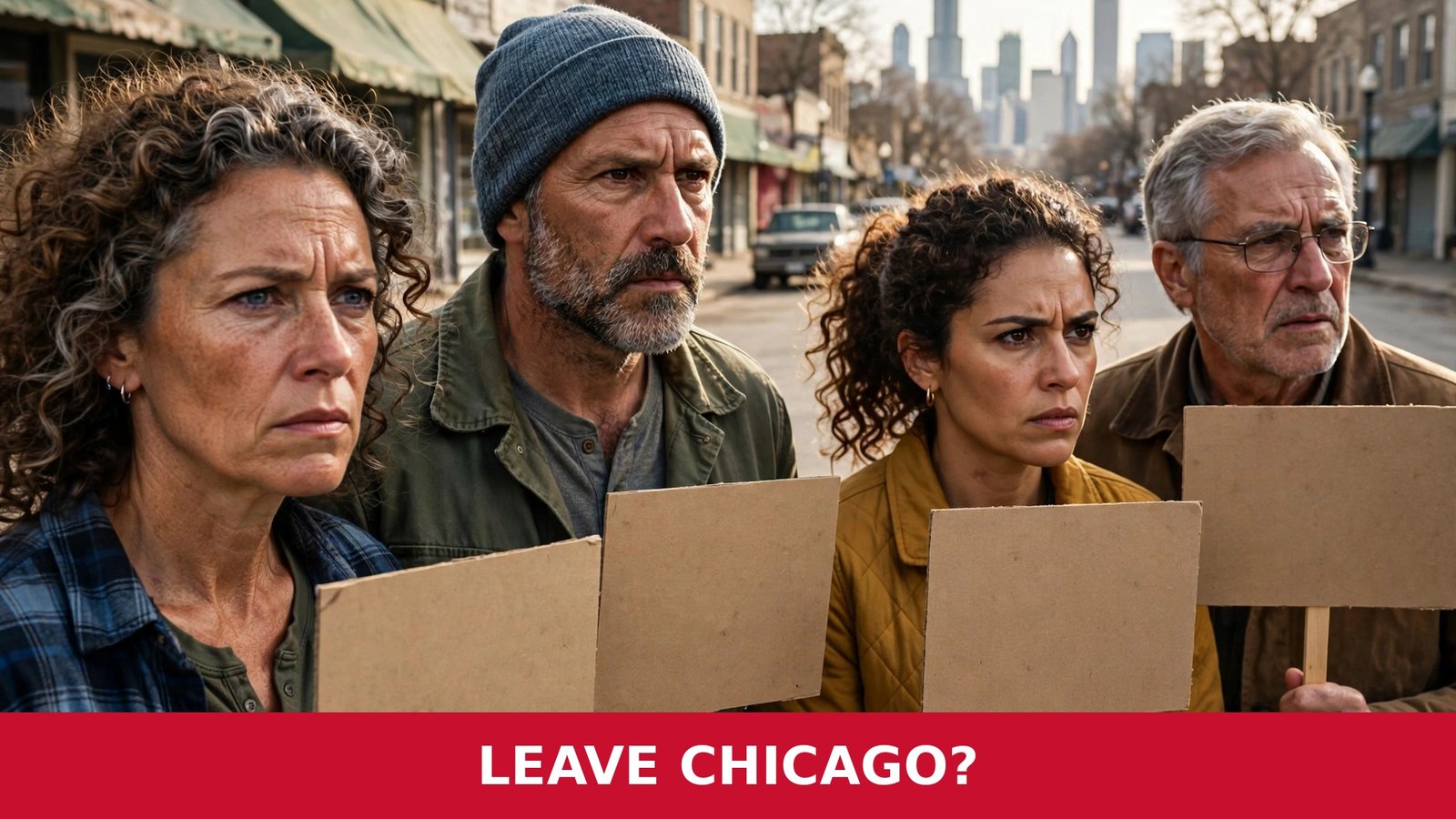
Eleven more Illinois counties are about to ask their voters a question that once sounded like a joke: should we leave Chicago behind and form a new state?
In the 2026 midterms, voters in Piatt, Coles, Henderson, McDonough, Warren, Macoupin, Monroe, Washington, Hamilton, Saline, and Gallatin counties will vote on non-binding referenda asking their county boards to explore splitting from Cook County and Chicago to create a separate state.
If all eleven pass, the total will reach 44 of Illinois's 102 counties — a striking number for a movement that began as a fringe idea and has steadily gained ground, county by county.
"We are ignored"
The driving force, supporters say, is not hatred of Chicago. It is a feeling of being overlooked. "We are ignored," said director Loret Newlin, summarizing a sentiment heard across rural Illinois: that state policy is made in Chicago, for Chicago, and that downstate voices count for little in Springfield.
That feeling has concrete roots. Chicago dominates Illinois politics by sheer population. Cook County alone holds more people than the rest of the state combined in political weight, and downstate counties argue that their concerns — farming, small-town economies, gun rights, local control — are routinely overridden.
Previous votes suggest the sentiment is widespread. Thirty-three counties have already approved similar measures, including Iroquois County, where the proposal passed with 73% of the vote, and Madison County, another significant win for the movement.
What a vote actually does — and does not do
Here is the crucial caveat, and it must be stated clearly: these referenda are non-binding. They do not create a new state. They do not even require a county board to act. They ask boards to "explore" the idea — to study it, discuss it, and signal support.
A real split would require approval from the Illinois legislature and from Congress — a political mountain that no serious observer believes can be climbed in the near term. Governor JB Pritzker has dismissed the movement as a stunt, saying it is not going to happen.
Supporters know this. They argue the votes are not about immediate secession, but about sending a message — a formal, counted, county-by-county message that downstate Illinois wants to be heard.
Critics argue the opposite: that the votes waste time and money, deepen division within the state, and offer voters a fantasy instead of practical solutions to real problems like jobs, schools, and healthcare.
A movement that keeps growing
Whatever its legal prospects, the movement's growth is real. From a handful of counties to 33, and now potentially 44, it has become a persistent feature of Illinois politics — a protest vote that refuses to fade.
Each new county that passes a referendum adds momentum, media attention, and a fresh talking point for supporters. Each new vote also forces Chicago-based politicians to answer a question they would rather ignore: why do so many of their fellow Illinoisans want out?
The midterms will provide the next answer. If all eleven counties vote yes, nearly half of Illinois's counties will have formally said they want to explore leaving. That will not create a new state. But it will make it much harder to dismiss the movement as a fringe idea — and much harder for Springfield to pretend it has not heard the message.
Sources: NBC Chicago via Focal News; EconoTimes/Independent.