From Ink to Grace: Brazil’s Most Tattooed Man Trades Tattoos for a Fresh Start
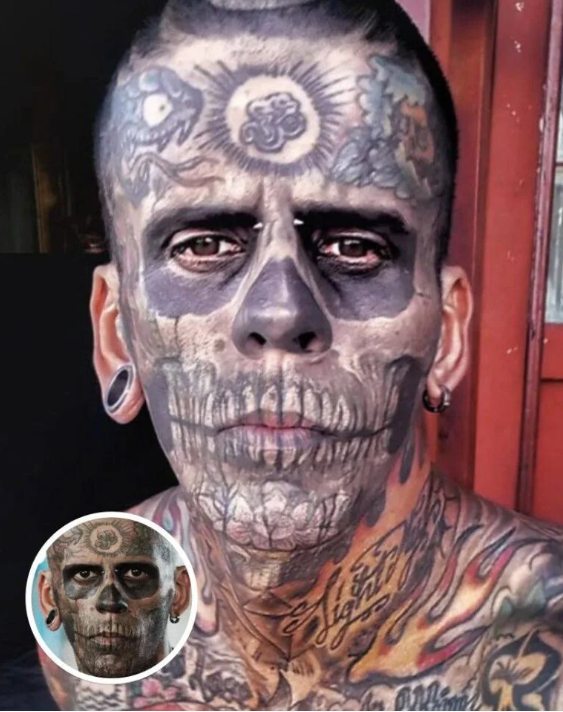
Picture this: A 36-year-old man stares back at you from the mirror, his face a canvas of swirling skulls, flames, and cryptic symbols—over 170 tattoos blanketing 95% of his body like a living mural. That’s how Leandro de Souza used to wake up every day. Once celebrated as Brazil’s most tattooed man, he turned heads at events like the Santa Rosa International Tattoo Expo, where his extreme body art made him a sensation. But fame came with a heavy price: isolation, addiction, and a gnawing sense of being trapped in his own skin. Fast-forward to today, October 19, 2025, and Leandro is unveiling a transformation that’s nothing short of miraculous. Through grueling laser sessions and unshakeable faith, he’s shedding his inked past to embrace a life of purpose, family, and peace. Buckle up—this story of redemption is as raw and inspiring as it gets.
The Ink That Defined—and Destroyed—A Life
Leandro’s journey into tattoos started innocently enough, back when he was just 13 years old in Bagé, a quiet city in southern Brazil’s Rio Grande do Sul state. Inspired by rock legends like Guns N’ Roses, Nirvana, and Metallica, he got his first ink as a rebellious teen idolizing the ’90s grunge scene. What began as a few band logos snowballed into an obsession with body modification. By his early 20s, he’d covered nearly every inch of himself—from his scalp to his toes—in over 170 designs. Skulls, demons, tribal patterns, and bold statements turned his body into a walking exhibit. “I was proud to be the most tattooed man in Brazil,” he later reflected in an interview with O Globo.
But the glamour faded fast. At 25, Leandro’s marriage crumbled, plunging him into a dark spiral of drug addiction, alcohol abuse, and despair. He bounced between shelters, prisons, and dead-end jobs, his striking appearance slamming doors on opportunities. “Finding work was impossible,” he shared with G1, a local news outlet. Employers saw the tattoos and assumed trouble; society gawked like he was a sideshow freak. “I felt like a circus attraction,” Leandro admitted, the weight of judgment crushing his spirit. By his early 30s, he was homeless, estranged from his son, and worlds away from his elderly mother—dreams of stability slipping further out of reach.
Social media amplified the chaos. Instagram reels of his tattooed form racked up views, but behind the likes lurked loneliness. “It was a life of extremes,” he told O Globo. “I didn’t feel good anymore.” Leandro’s story echoes a broader trend: While tattoos have surged in popularity—over 40% of U.S. adults have at least one, per a 2023 Pew Research study—extreme modifications can lead to regret, especially when tied to trauma or identity crises. Leandro’s turning point? A rock-bottom moment two years ago, when he hit an evangelical church service and found solace in Christianity.
Faith as the Catalyst: A Divine Reset Button
It wasn’t an overnight miracle, but faith became Leandro’s lifeline. “The first step to everything in life is to accept that you can’t do it alone,” he posted on Instagram after three years sober from drugs and alcohol. Converting to evangelical Christianity flipped the script. No longer did the tattoos represent rebellion; they felt like chains from a life he wanted to leave behind. Inspired by biblical calls to renewal—like shedding the old self for a new creation in Christ—Leandro decided to literally erase his past.
Earlier this year, he reached out to Hello Tattoo Studio in São Paulo, a spot known for both inking and un-inking. To his surprise, they offered the procedures for free, seeing his story as a testament to true change. “Tattoos don’t define character,” the studio posted on their socials. “Real transformation comes from choices, effort, and determination.” What followed was a commitment to at least eight sessions, spaced every three months, each lasting 30-40 minutes of pure agony.
Leandro’s not shy about the pain—it’s worse than getting tattooed, he says, even with anesthesia. “It hurts a lot… that’s part of the price for my past choices,” he told O Globo, his voice steady but eyes telling a tale of resolve. As of September 2025, he’s completed five facial sessions, revealing raw, swollen skin that’s slowly healing into something unrecognizable—in the best way. His latest Instagram update, captioned “After the fifth session of facial tattoo removal, @helltatto – gratitude, it’s about Jesus Christ,” shows a face emerging from the ink: smoother, scarred but hopeful, with faint outlines fading like old memories.
The process isn’t just cosmetic; it’s science-backed rebirth. Modern laser removal, like the Q-switched and CO2 combos Leandro’s using, targets ink particles with high-energy light pulses, shattering them for your body to flush out. A third “sealer” laser promotes collagen regrowth, minimizing scars and rejuvenating skin. It’s no quick fix—full body clearance for someone like Leandro could take years and thousands of dollars—but his free treatment highlights a growing compassion in the industry. Tattoo regret is rampant; the American Society for Dermatologic Surgery reports a 20% uptick in removal requests post-pandemic, as people reassess life priorities.
A New Chapter: Family, Purpose, and a Warning to the World
Why go through hell for this? For Leandro, it’s all about reclaiming dignity. With clearer skin comes clearer prospects: He’s landed a gig as an event photographer, paying child support for his son and fundraising to regain guardianship of his mother. “Dignity has been restored,” he beamed after a session, per the studio’s post. No more shelters or stares—just a man building a stable home, grounded in faith.
His story’s rippling outward, too. On X (formerly Twitter), posts about Leandro’s glow-up have gone viral, with users like @Global_Folder sharing side-by-sides: “Brazil’s most tattooed man transformation… Each session is tougher than the tattooing itself, but for Leandro it represents leaving behind his old life.” Comments flood in—admiration from recovering addicts (“This gives me hope!”), warnings from parents (“Kids, think twice about face tats”), and even lighthearted jabs (“Brazilian Steve-O leveling up”). A Reddit thread in r/interestingasfuck racked up 4,600 upvotes, sparking debates on body autonomy and second chances.
Leandro’s message is crystal clear: “I regret it,” he says of the face tattoos that once defined him. “Think carefully before doing something like this. There are things far more important.” Now, three years clean and counting, he just wants “to live with purpose—and in peace.” It’s a reminder that change, no matter how painful, is possible. Whether through faith, therapy, or sheer grit, shedding what’s holding you back can reveal the person you’ve always been underneath.
Leandro’s not done yet—more sessions loom, and full removal might never be perfect. But in a world obsessed with permanent markers, his story screams impermanence: You can rewrite your narrative, one laser pulse at a time. What’s your “tattoo” you’re ready to remove? Leandro’s betting on grace—and so far, it’s winning.