Not Mutants, But a Wake-Up Call: The Truth Behind Those Eerie ‘Bubble-Skinned’ Deer Sweeping the US
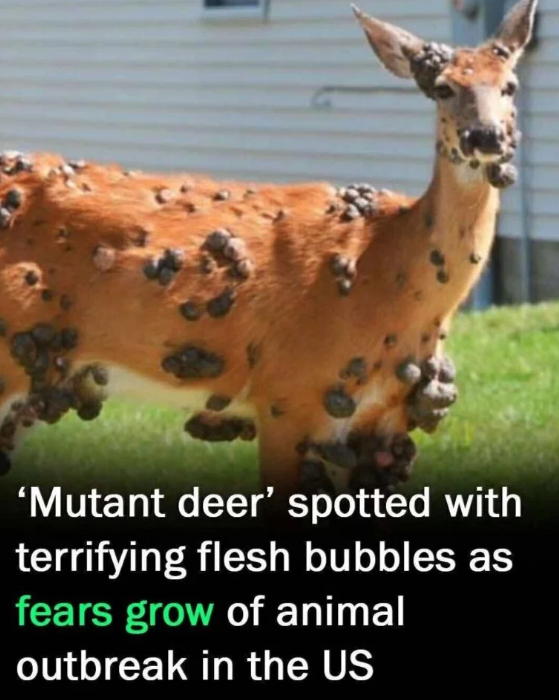
Scroll through your feed on a crisp fall evening, and suddenly, there it is—a majestic white-tailed deer, but something’s horribly off. Bulbous, fleshy lumps protrude from its neck like alien pods, or its face is marred by wart-like bubbles that look straight out of a sci-fi horror flick. “Mutant deer?” one viral Reddit post gasped in early August 2025, sparking a frenzy of shares and speculation. From New York backyards to Pennsylvania trails and Wisconsin woods, photos of these “zombie-like” creatures have ignited fears of a wildlife apocalypse. Is it a new virus? Climate mutation? An outbreak poised to jump to humans? Breathe easy, folks—it’s not mutants, but a familiar foe called deer cutaneous fibroma, or “deer warts.” Still, in a summer buzzing with reports of “Frankenstein rabbits” and “zombie squirrels,” this surge in sightings is a stark reminder of how interconnected our world—and its diseases—really is. Let’s unpack the mystery, the science, and why your next hike might need extra bug spray.
The Viral Villain: What Exactly Are These ‘Bubble’ Growths?
Those grotesque lumps? They’re cutaneous fibromas—benign, wart-like tumors caused by a papillomavirus that’s been plaguing deer since at least the 1950s. Picture a pesky cold sore, but on a deer’s skin: the virus infects skin cells, triggering overgrowth that forms hard, hairless nodules. They can be pea-sized or balloon to football proportions, often gray, black, or fleshy-pink, clustering on the head, neck, forelegs, or even eyelids. One Wisconsin snapshot from late June 2025 showed a young buck’s face nearly obscured by them, looking like it wandered off a dystopian set. A Pennsylvania trail cam in early August captured another with a softball-sized wart dangling from its side, prompting hunters to wonder if it was a wound or worse.
Don’t panic—these aren’t fatal for most deer. The growths are painless and skin-deep, rarely penetrating muscle or organs. A healthy immune system fights back, causing the warts to dry, shrink, and slough off in 1-5 months, leaving minimal scarring. Only in rare severe cases—say, if a massive fibroma blocks vision, snags on branches during flight, or invites bacterial infection—might it hobble the animal enough to raise mortality risks. Wildlife agencies like Pennsylvania’s Game Commission and Wisconsin’s DNR report no population crashes from this; it’s more cosmetic catastrophe than killer.
How It Spreads: Bugs, Bucks, and Everyday Deer Drama
This papillomavirus is deer-exclusive—no jumping to humans, pets, or livestock. Transmission? Mostly mechanical, not magical. Biting insects like mosquitoes and ticks act as unwitting couriers, shuttling virus-laden blood from infected deer to healthy ones via shared bites. Direct contact amps it up: deer rubbing antlers on the same tree, grooming each other (bucks especially during rutting season), or sparring, which explains why males get hit harder. Even contaminated surfaces—like a favorite scratching post—can nick skin and pass the bug along.
Why the 2025 spike? It’s not a full-blown outbreak, but warmer, wetter summers have supercharged insect activity, peaking fibroma reports in late summer and fall. Social media’s the real amplifier: Trail cams and smartphones mean more eyes on wildlife, turning a routine sighting into a viral storm. Officials in the hot-spot states confirm no unusual surge—just heightened awareness amid hunting season. Still, it’s echoing a bizarre wildlife trend: Those “horned” Colorado rabbits? Shope fibroma virus, a pox relative. “Zombie squirrels” in backyards nationwide? Squirrel fibromatosis, another poxvirus family affair. Coincidence? Or a sign of stressed ecosystems?
Humans in the Crosshairs: No Warts, But Watch for Ticks
Good news: You can’t catch deer warts. The virus is species-specific, latching onto deer cells in ways it can’t with ours. (Though it’s in the same papillomavirus clan as our common warts or even HPV-linked cancers—evolution’s quirky family tree.) Eat venison from an afflicted deer? Totally safe, as long as you trim away the skin tumors—no deep tissue invasion.
The real human hazard? Those ticks and mosquitoes buzzing around. Deer are prime hosts for blacklegged ticks, vectors for Lyme disease, anaplasmosis, and babesiosis. As Dr. Omer Awan from the University of Maryland warned, “Temperature changes are resulting in diseases that were never endemic in certain areas to become endemic.” Lyme cases have doubled in the US over the last two decades, creeping north into Maine, southern Canada, and beyond. Warmer springs mean ticks quest earlier (sometimes in February!), longer active seasons stretch to December, and milder winters let more survive. Reforestation, suburban sprawl into deer habitats, and booming white-tail populations (over 30 million nationwide) compound the risk—ticks hitchhike on deer, mice, birds, dropping off in your yard.
By 2025, the CDC logs over 476,000 annual Lyme diagnoses, with “hot spots” exploding 320% since the ’90s. Climate models predict further northward marches, potentially tripling cases in Canada alone. It’s not just Lyme—Powassan virus, a rare but deadly tick-borne brain inflamer, is ticking up too.
Stay Safe in Deer Country: Your Action Plan
Seeing a warty deer? Snap a pic for your local wildlife agency—they track patterns without intervening (no treatment for wild ones; nature handles it). For you: DEET up, tuck pants into socks on hikes, and do the tick tango—full-body checks post-outdoors, hot showers, and tumble-dry clothes on high. Found a tick? Remove with tweezers, save it in a baggie for ID, and watch for fever or bull’s-eye rashes.
This “mutant” scare? It’s a symptom of bigger shifts—climate-fueled insect booms stressing wildlife, blurring lines between woods and backyards. As one expert put it, it’s “the canary in the coal mine for ecosystem health.” Deer warts won’t doom Bambi, but they spotlight the urgent need for conservation, tick vigilance, and climate action. Next time you spot those bubbles, remember: It’s not horror—it’s a call to protect the wild spaces we all share. Stay curious, stay covered, and keep exploring.