President Donald Trump did not dodge the question. He owned it.
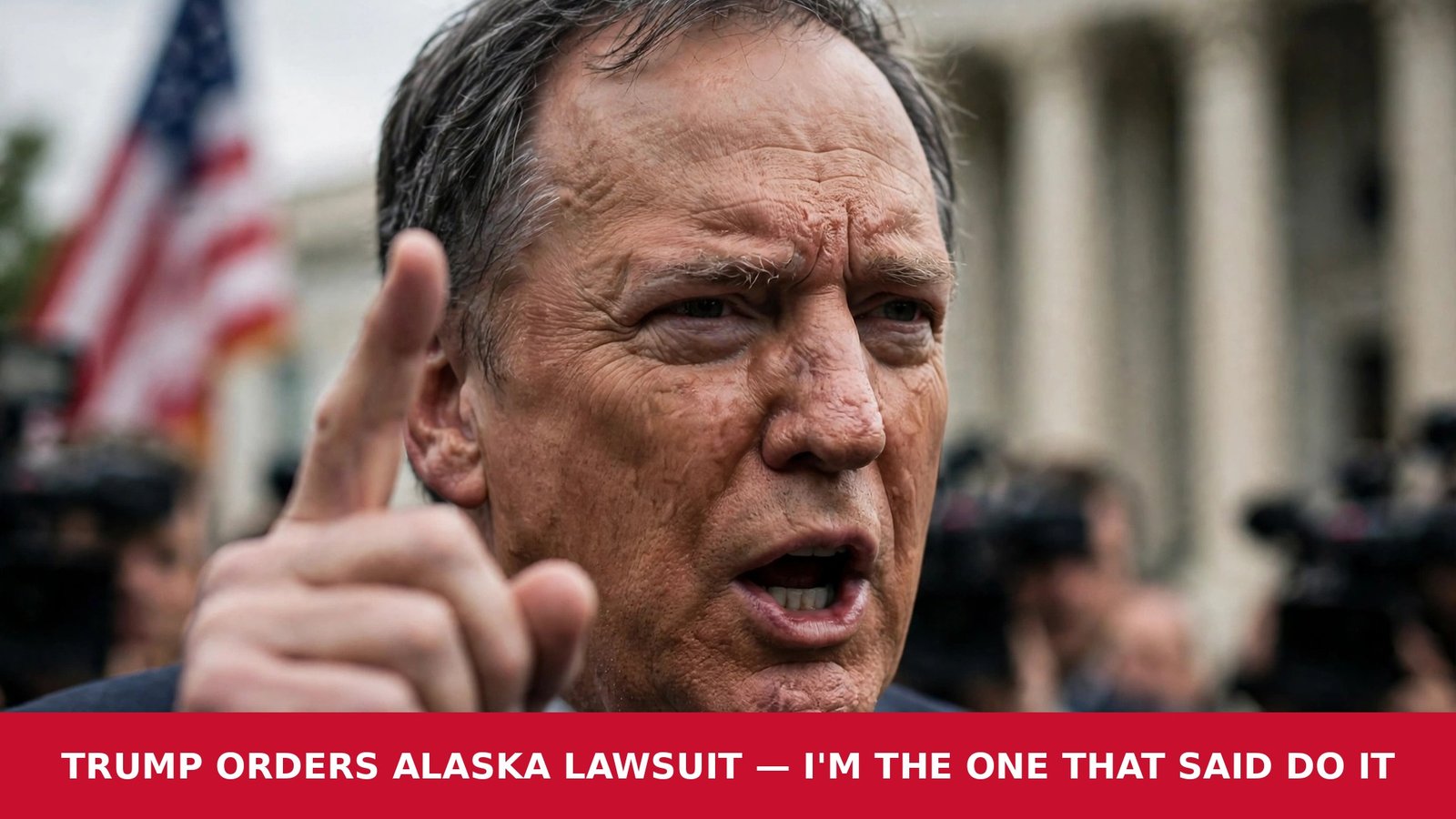
On Friday, October 23, Trump said he personally ordered the Justice Department to sue to block Alaska from certifying its November 3 Senate race result if Republican incumbent Senator Dan S. Sullivan loses narrowly.
"I'm the one that said, 'Do it,'" Trump said.
With that one sentence, a lawsuit that might have looked like routine Justice Department business became something else entirely: a presidential intervention, announced by the president himself, days before voters finish casting ballots.
The lawsuit at the center of it
The Justice Department filed its lawsuit on October 22 in federal court in Alaska. Its argument centers on a second name on the ballot: Daniel J. Sullivan Jr., a retired schoolteacher from Petersburg.
The DOJ argues that having two men with nearly identical names on the ballot could confuse voters and siphon votes away from the incumbent senator — a split that, the lawsuit contends, would benefit Democratic challenger Mary Peltola.
The lawsuit asks the court to prevent certification of a result "that may be impacted by voter confusion" while an investigation is pending. It does not ask the court to declare a winner. And, crucially, it has not blocked anything yet. The election has not been decided, and no certification has been stopped.
A name fight Alaska already had
This is not the first time Alaska has wrestled with the two Sullivans.
Alaska elections director Carol Beecher determined on June 15 that Daniel J. Sullivan Jr. had not declared a good-faith candidacy but had filed "with a purpose to confuse or mislead" voters. State courts, however, reinstated him on the ballot, and the Alaska Supreme Court upheld that decision in June.
Sullivan Jr. himself denies he is a plant, and Democrats have rejected that claim as well. He is, by his own account, a retired teacher running for office — not a decoy.
That history is why the federal lawsuit landed with such force. Alaska's own system already examined the question, and its courts already ruled. Now the Justice Department is asking a federal court to revisit it, days before the election.
"Strange and unusual"
Election-law experts are not hiding their surprise.
Derek Muller, a professor at Notre Dame, called the legal argument "strange and unusual" in comments to CNN. The reasoning is unusual, he suggested, because federal lawsuits seeking to pre-emptively block certification over ballot confusion — before any votes are even counted — are extraordinarily rare.
The timing is what makes it explosive. A lawsuit filed ten days before an election, aimed at a race that could help decide control of the Senate, does not stay a dry legal filing for long. It becomes a political event.
What this really means for November 3
Strip away the legal language and the stakes are simple. If Senator Sullivan wins, the lawsuit likely fades. If he loses narrowly, the Justice Department's filing gives the administration a ready-made legal path to challenge certification — and Trump has now publicly tied himself to it.
Supporters of the lawsuit will say it is about protecting voters from confusion. Critics will say it is about pre-loading a challenge to an unfavorable result. Both sides agree on one thing: the president has now made this his fight, in his own words.
Alaska voters, meanwhile, head to the polls with a strange new reality. Their Senate race is no longer just a contest between an incumbent and a challenger. It is now a national story, with the president himself in the middle of it.
Sources: Reuters, USA Today, AFP via AsiaOne (October 23, 2026).